
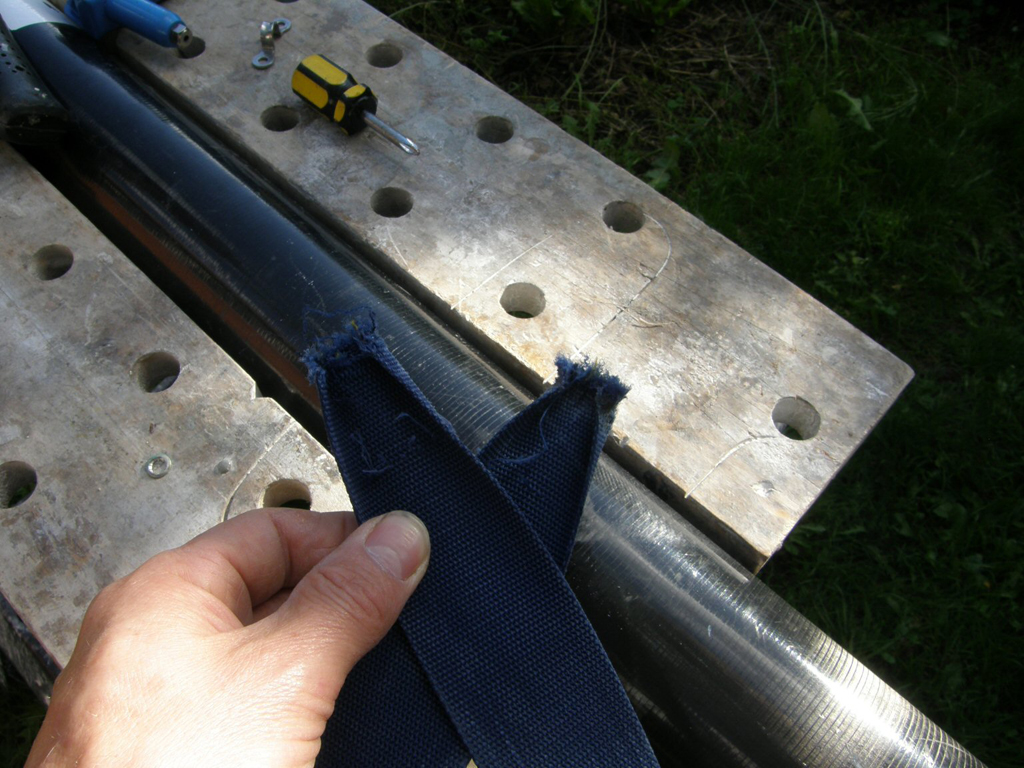
 Kicker Webbing Snapped - just when we were having fun - damn and blast!  |
So how do you fix it? As the original is a webbing strap it can of course be replaced with more webbing, for which there are merits in using. It is low profile over the boom and doesn't catch the main sail like the old alloy boom design with a fairlead on top. The webbing design does a double wrap over the boom with a rivet underneath. Nice low profile and designed to spread the kicker load out over a length of the boom instead of the old point contact on the alloys, which does place the heavy loads all in one place which won't help the alloy longevity.
The repair described here takes a compromise route of using rope, not wire and wrapping it over the boom like the webbing. It was done that way because :-
- 5mm Dyneema is much stronger than wire
- Can easily form self locking loops by use of a fid
- Is very hard wearing at the loops – having the kicker shackle through them
- Is much more easily replaced on the water or off, if it breaks again
- Retains sufficiently low profile under main sail
- Still spreads the load along the boom, similar to the webbing
The only downside of this method is the under boom fairlead, which would be better flattened slightly before installation. It might catch the crews buoyancy aid but a bit of Duct tape over it would smooth that out.
So how's it done ?
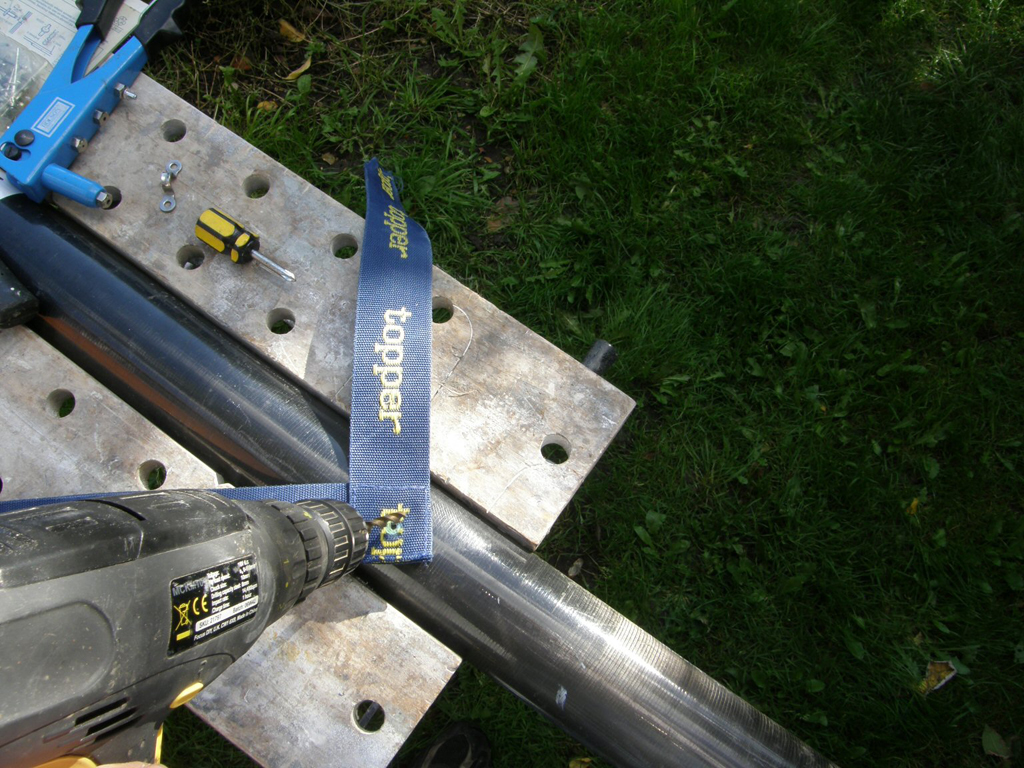 Get the bits and tools together and drill out the old rivet. |
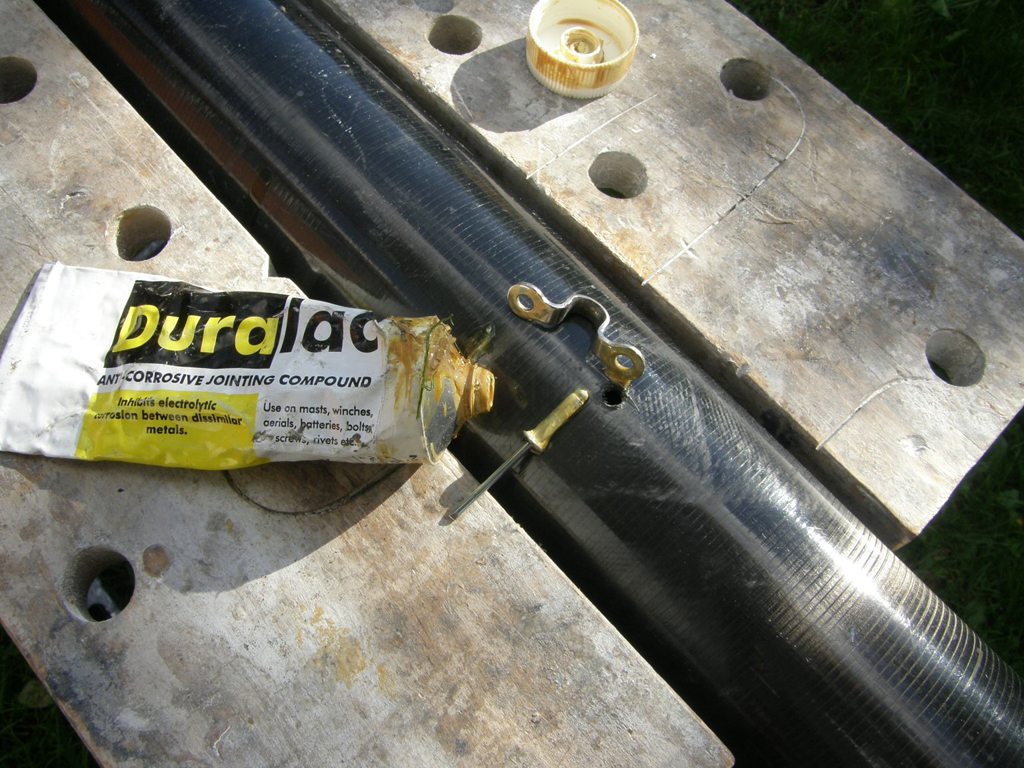 As it's a carbon boom, get out the Duralac. |
Carbon fibre is a very electrolytically active material. When in contact with different materials, like the aluminium rivet, stainless fairlead and salt water, the mix of materials creates a battery. That creates a small current and over time eats away at the joint between them. Talk to any carbon mast sailor, e.g. RS800, and they have the problem of cleats pulling out leaving big holes due to this corrosion. Carbon isn’t a wonder material solving all problems in one hit.
Duralac is a zinc paste that inhibits the electrolysis and helps prevent corrosion. It is still recommended to re-make the joint every 2 or 3 years, even with mainly fresh water sailing. Be warned – zinc paste is not nice stuff. Handle with care and preferably gloves so that you don’t get it on your skin. Clean up the excess and dispose of the paper towel carefully. End of chemistry lesson.
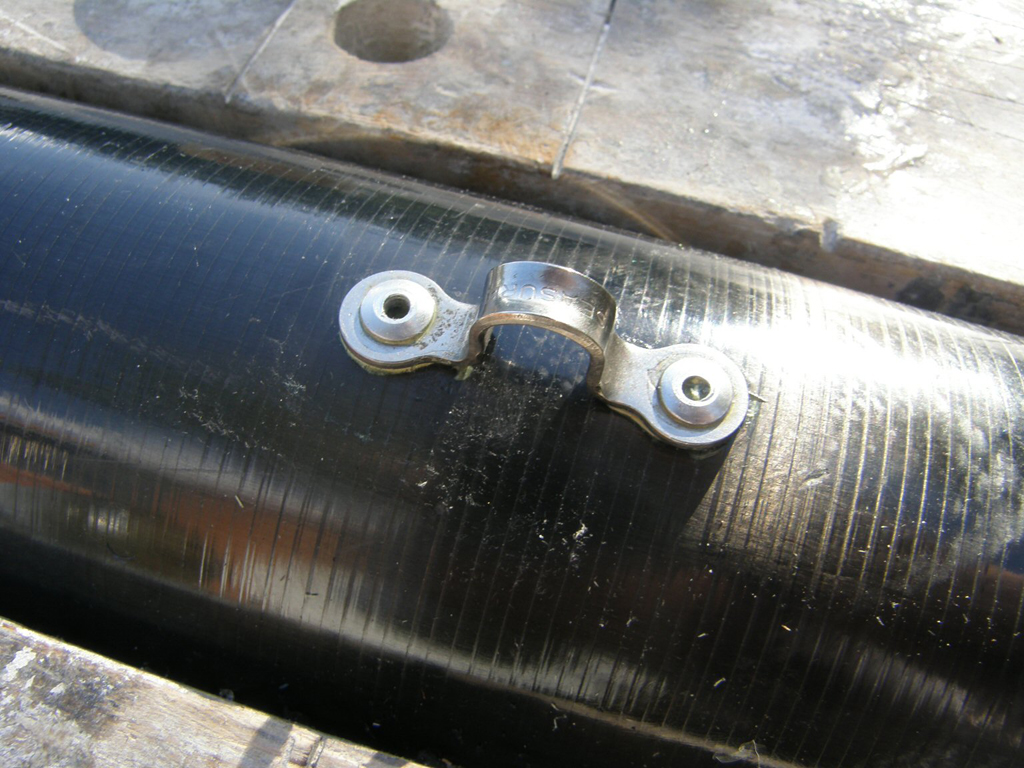
Use the old hole for one fairlead point – the forward hole to keep kicker positioning dimensions within Class Rules. Drill a new hole just big enough for the 2nd rivet aft of the first one. Duralac both holes, rivets and the underside of the fairlead.
|
Clean up remaining Duralac and it looks as pretty as the above. |
|
 Make up the new Dyneema strop and fit as shown above. |
 From the side view showing shackle and fairlead under boom. |
You can see from this shot that if did break out on the water it would be easy to jury rig a “get you to the end of the race series” bit of rope from the spare you always carry. You do, don’t you ??
How do you form the loops or use a fid ?? See separate article on fidding. It really is easy with the right tools. With a bit of practice you can also get them spot on even !!
Bob Ladell
Autumn 2010